Your Web Serial’s First Chapter: 5 Principles That Make Readers Click Next
Your Web Serial's First Chapter: 5 Principles That Make Readers Click Next
Whether you call it a web serial or a web novel, readers who open its first chapter decide within a few chapters, at most, whether to keep going. Maybe that's why the first chapter is the one writers rewrite the most. This article covers five principles for an opening that carries readers naturally into the next chapter.

- Open your first scene on an event. It's enough to reveal your world little by little, widening out from that first event.
- Show the protagonist's problem and what they could lose early on. Readers follow more easily when the first page makes clear whose story this is.
- Stamp your genre on the first page. Let readers feel, in chapter one, the mood your title and blurb promised.
- Leave one question and release information a little at a time. The fewer and clearer the questions, the more readers look forward to the next chapter.
- Shape the last line of chapter one so it starts chapter two. That line is what moves readers on to the next chapter.
Why the first chapter of a web serial is the hardest
Readers starting chapter one know nothing about your protagonist yet. They haven’t grown attached, so the moment it gets a little dull, they hit the back button.
Writers are in the opposite position. When you’re writing chapter one, you have more you want to show than at any other point: the world you built with such care, the protagonist’s past, the foreshadowing of everything to come. You want to fit it all into chapter one.
When the two collide, chapter one’s opening fills up with too much exposition. That’s why nearly every piece of writing advice includes some version of “start with exposition and you’ll stall.”
Chapter one is where you make your first promise to the reader. Show them what they’ll find if they follow this story.
The five principles below set out what belongs in chapter one and what can wait.
Principle 1
Open on an event, not exposition
Start chapter one with background or the protagonist’s life story, and readers get tired and leave before the story has even begun. Begin your first scene at a moment when the protagonist is doing something. A fight, an escape, or even just an argument with someone is enough to draw readers in naturally.

If you’re struggling to find a starting point, think of the moment the extraordinary collides with the everyday: a strange text message on an ordinary commute, or a status screen that suddenly pops up in front of the protagonist the night before an exam. Everything that came before that moment, like the background and the protagonist’s life story, can be woven in naturally later, when it’s needed.
Reveal your world little by little through events. Instead of explaining the whole magic system, just show the one spell your protagonist uses in this scene. Readers come to understand your world, and slowly feel at home in it, by watching its rules in action.
For how to keep the worldbuilding you leave out of chapter one organized, see Method 1 of A Story Bible for Your Web Serial: 5 Ways to Keep a Long Story Consistent.
Principle 2
Show the protagonist’s problem and what they could lose early on
Readers get pulled into a story when they find out what the protagonist wants. On the first page, or at the latest before the first scene ends, readers need to learn who the protagonist is, what they want right now, and what they’ll lose if they fail.

Take a regression story as an example. The fact that the protagonist has gone back in time isn’t enough to set the story moving. When the first scene also reveals what they absolutely have to change this time around, and what they’ll lose if they miss it, readers take the protagonist’s side and follow the story.
What’s at stake doesn’t have to be grand. A protagonist struggling to keep a promise to a younger sibling this evening can hook readers just as well. The scene just needs to show how much it means to them.
Principle 3
Stamp your genre on the first page
Readers start chapter one based on your title and blurb. If someone clicks in expecting romantasy and the first page is a long battle sequence, they’ll feel they’ve taken a wrong turn, however well written the scene is, and go looking for another story.
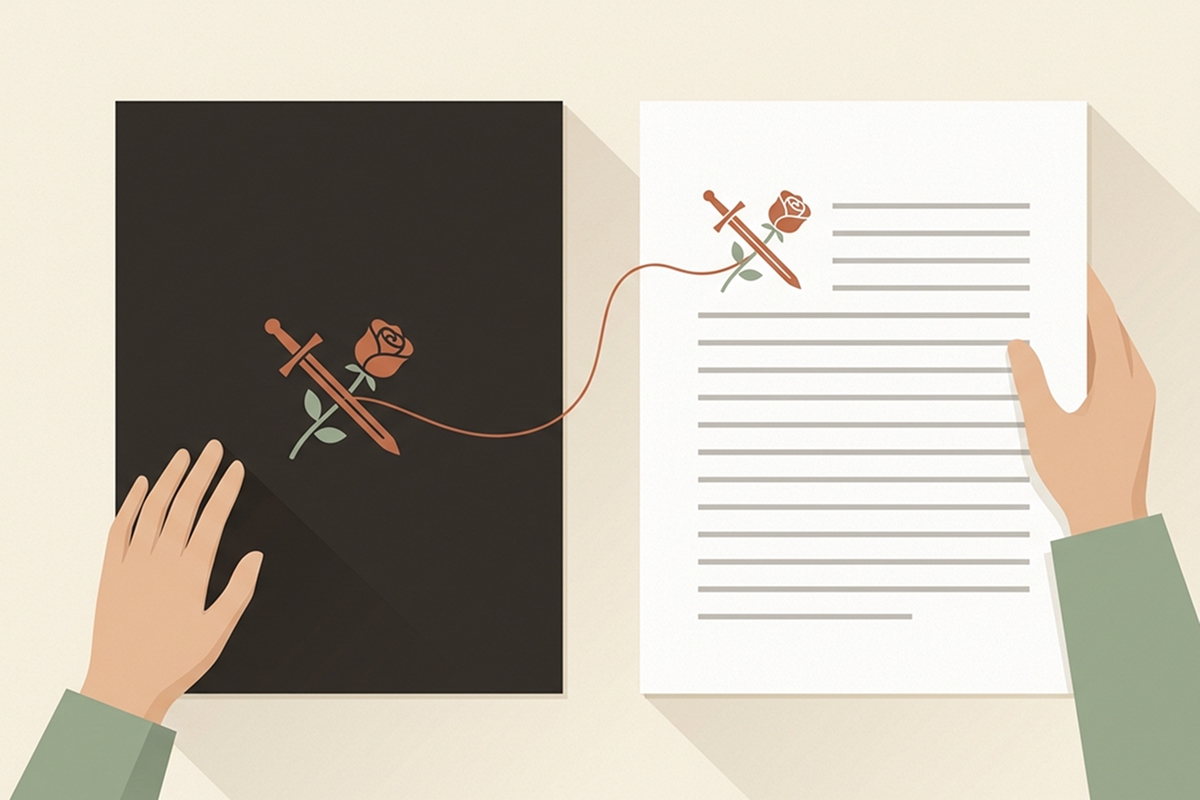
There’s a simple way to check whether your genre comes through. Cover the title and blurb, and see whether the first page of chapter one alone lets a reader guess the genre. If it doesn’t show right away, work one signature element of the genre into the first scene.
Be wary of lifting your flashiest scene to the front of chapter one and then dropping straight back into slow everyday life. Readers go in assuming the pace and mood of the first scene will carry on. If chapter two breaks that expectation, they’ll feel cheated.
Principle 4
One question, and information a little at a time
The more characters, places, and proper nouns appear in chapter one, the more readers have to remember. Try starting with only two or three named characters besides the protagonist. Everyone else can go by their role, like “the guard” or “the coworker at the next desk.”

Narrow what you leave readers wondering about to a single question, too. Why is this person being chased? What happened that night? What is that ring? When several questions are thrown at them at once, readers start losing track of which one to follow. Make the single most important question clear, and save the rest for chapters two and three.
Principle 5
Shape chapter one’s last line to start chapter two
It’s better to end chapter one’s final scene the moment a new problem or choice appears, rather than when things wrap up. Think of a door swinging open as a stranger walks in, or the protagonist just about to make a decision they can’t take back.

Once you’ve written the last line, read it on its own. If that single line is enough to make you curious about the next chapter, you’ve ended it in the right place.
Ending this way also makes chapter two easier to write, because its first line falls into place naturally. Pair this with “End each session with the next chapter’s first line” from Writing a Web Serial Every Day: 5 Habits.
A final check after you finish chapter one
Once chapter one is done, read it through on a phone screen, the way your readers will, and check these four things.
Is the protagonist in the first paragraph?
Check that the protagonist appears in the first paragraph, or at least that the scene opens through their eyes.
Does exposition run on too long?
If more than three paragraphs of pure exposition sit back to back, move some of it to later chapters or turn it into dialogue and action.
Can readers see the genre?
See whether the first page alone, without the title and blurb, lets readers guess what kind of story this is.
Is there a reason to click through to chapter two?
Check whether the last line on its own makes readers curious about the next chapter.
Frequently asked questions
How much worldbuilding should go into a web serial’s first chapter?
Just enough for readers to understand the scene. Show only the rules readers need to follow what the protagonist is going through right now, and let the rest come out through events as the story goes on.
Is it okay to start with a prologue?
Yes. But if the prologue is long or its mood is very different from the main story, readers may leave before the real story begins. If you write one, keep it short, and have chapter one dive straight into whatever is happening to the protagonist.
When should I revise chapter one?
We recommend revising it after you’ve written a few more chapters. Only once you know where the story is going does it become clear what chapter one needs to promise.
Closing thoughts
Try to fit everything into chapter one and it gets heavy. If it simply gets readers to chapter two, it has done its job. Open your first scene on an event, and leave the last line open to the next chapter. There’s plenty of time for everything in between to unfold from chapter two on.
One more thing: we built a reader-style preview into Glit so you can read chapter one exactly as it will appear on a reader's phone, plus a worldbuilding tree that keeps your story notes organized right beside the manuscript. If you're curious how they work, take a look at the guides.